The scoreboard first. Of the seven living species, four are listed Least Concern, two are Endangered, one is Critically Endangered — and all seven have decreasing populations, per their own IUCN assessments. No sloth species is doing well; some are just declining from a bigger base. Only one has ever been counted: the rest are too hard to see.
Seven species, seven downward arrows: the full sloth scoreboard
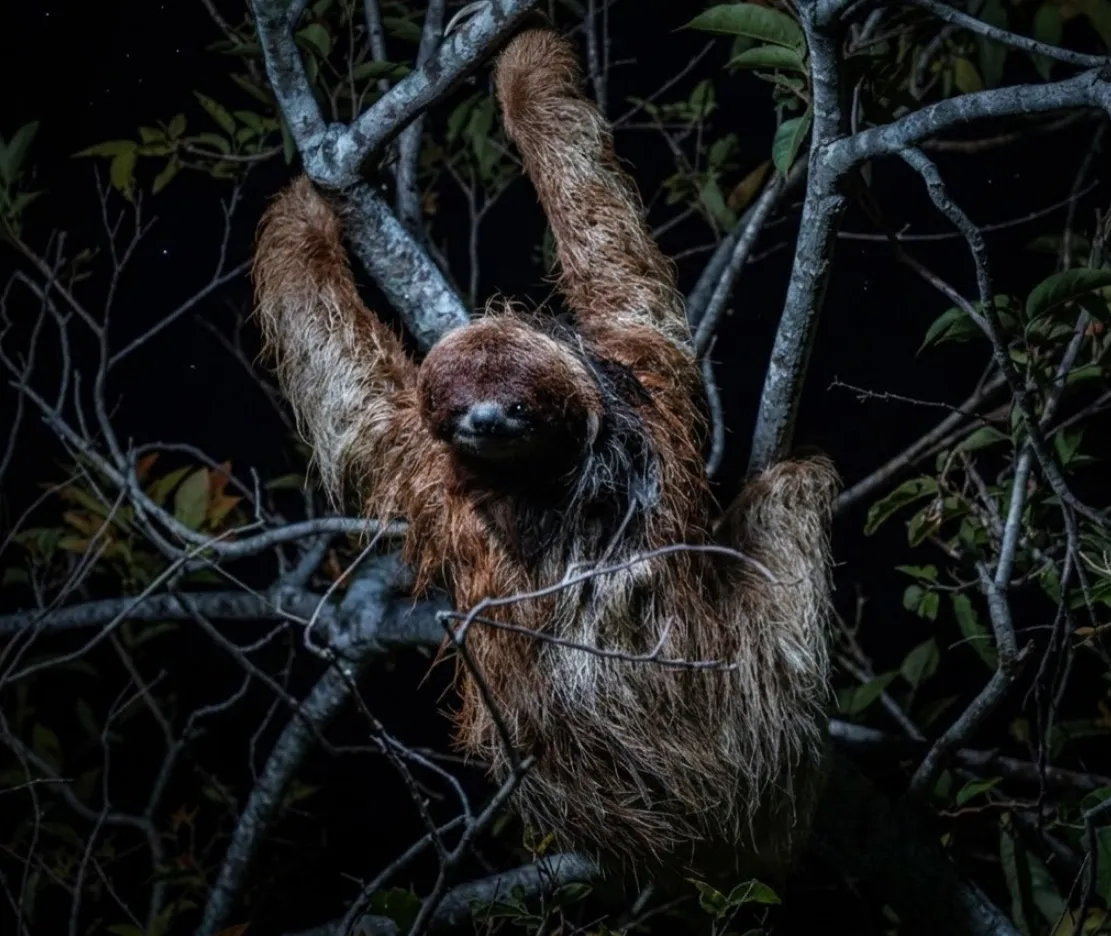
Every living sloth species with its current IUCN Red List category and assessment year. The arrow is the assessed population trend — decreasing in every case, the Least Concern species included. The maned sloth became two Endangered species in 2022, when a 172-year-old proposal was vindicated by DNA.
Source: IUCN Red List assessments: B. variegatus, B. tridactylus, B. pygmaeus, C. didactylus, C. hoffmanni (all assessed 2022); B. torquatus and B. crinitus (assessed 2024, published 2025). Split: Miranda et al. 2022, Journal of Mammalogy.
The edge cases
An island the size of a neighbourhood
The pygmy three-toed sloth exists on exactly one island: Isla Escudo de Veraguas, Panama — 4.3 square kilometres, cut off from the mainland for about nine thousand years, long enough for the castaways to shrink into the smallest sloth of all. For a decade the species was reported as “fewer than 100”, from surveys that counted the mangroves, which cover under 3% of the island. The 2022 assessment, looking at the whole island, puts the population at 2,000–2,500 — better news that is still a rounding error of a species, Critically Endangered at every assessment since 2006, with visiting timber harvest and tourism pressure on its only home.
The modern threat list
What actually kills a sloth in 2026
Gaps in the canopy. A sloth crosses a road the way you saw on page 3: slowly, on the ground, in the open. Fragmented forest forces those crossings constantly — the IUCN notes rising roadkill from Bolivia to the duplicated BR-101 highway through maned-sloth country.
Wires that look like branches. To a sloth, a power line is a vine with a grip problem. Costa Rica records thousands of wildlife electrocutions a year — the Sloth Conservation Foundation reports over half are sloths, and that only about a quarter of electrocuted animals survive. Dogs are the other ground-level hazard the forest never prepared them for.
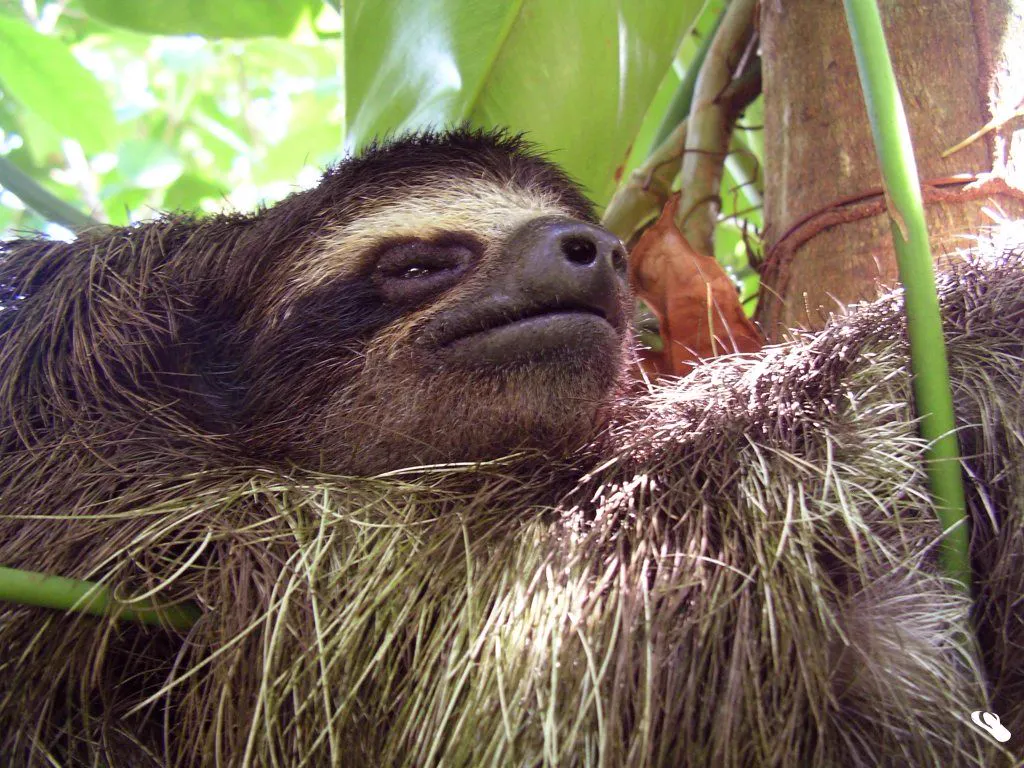
Being adorable. The same face that made sloths famous feeds a trade: wild-caught animals — mostly infants pulled from their mothers — sold as pets or rented out as photo props. The one published study of the “sloth selfie” economy watched animals in Manaus and Iquitos being passed among an average of five tourists per session, handled by the head, limbs and claws. Every sloth researcher and rescue centre says the same thing: do not hold the sloth.
Checked — what gets repeated vs what was measured
Out of date, honestly earned. The famous count — 79 animals, 2012, PLoS ONE — surveyed the mangroves, which are less than 3% of the island. The 2022 IUCN assessment estimates 2,000–2,500 across the whole island. Still one of the smallest ranges of any mammal on Earth; still Critically Endangered.
Sloths are wild, solitary, and stress-concealing — stillness is their alarm response, which is exactly why they photograph so calmly. The selfie-trade study (Carder et al. 2018) and the IUCN assessments both treat handling and the pet trade as active threats to wild populations.
Four of seven are Least Concern — and every one of the seven is assessed as decreasing, with no global population estimate for any species except the pygmy. “Fine” is doing a lot of work in that sentence.
Sources for this page
- IUCN Red List — Bradypus pygmaeus (CR; the island, the estimates, the threats)
- IUCN Red List — B. torquatus (EN, 2024) and the fragmentation figures
- IUCN Red List — B. crinitus (EN, 2024; the BR-101 roadkill note)
- IUCN Red List — B. variegatus (LC; pet and selfie trade as threats)
- Miranda et al. 2022, Journal of Mammalogy — the maned-sloth split
- Kaviar, Shockey & Sundberg 2012, PLoS ONE — the 79-sloth mangrove census
- Carder et al. 2018, Animals — the sloth-selfie trade study
- Sloth Conservation Foundation — electrocutions and dog attacks in Costa Rica
End of the issue. Back to page 1, or to everything else the publication covers.