The Sloth Issue · 04 · The Garden
An ecosystem
in the fur.
A sloth carries moths, algae and a microbial community in its coat. The inhabitants are documented. What the sloth gains from them remains a question.
Explore the relationships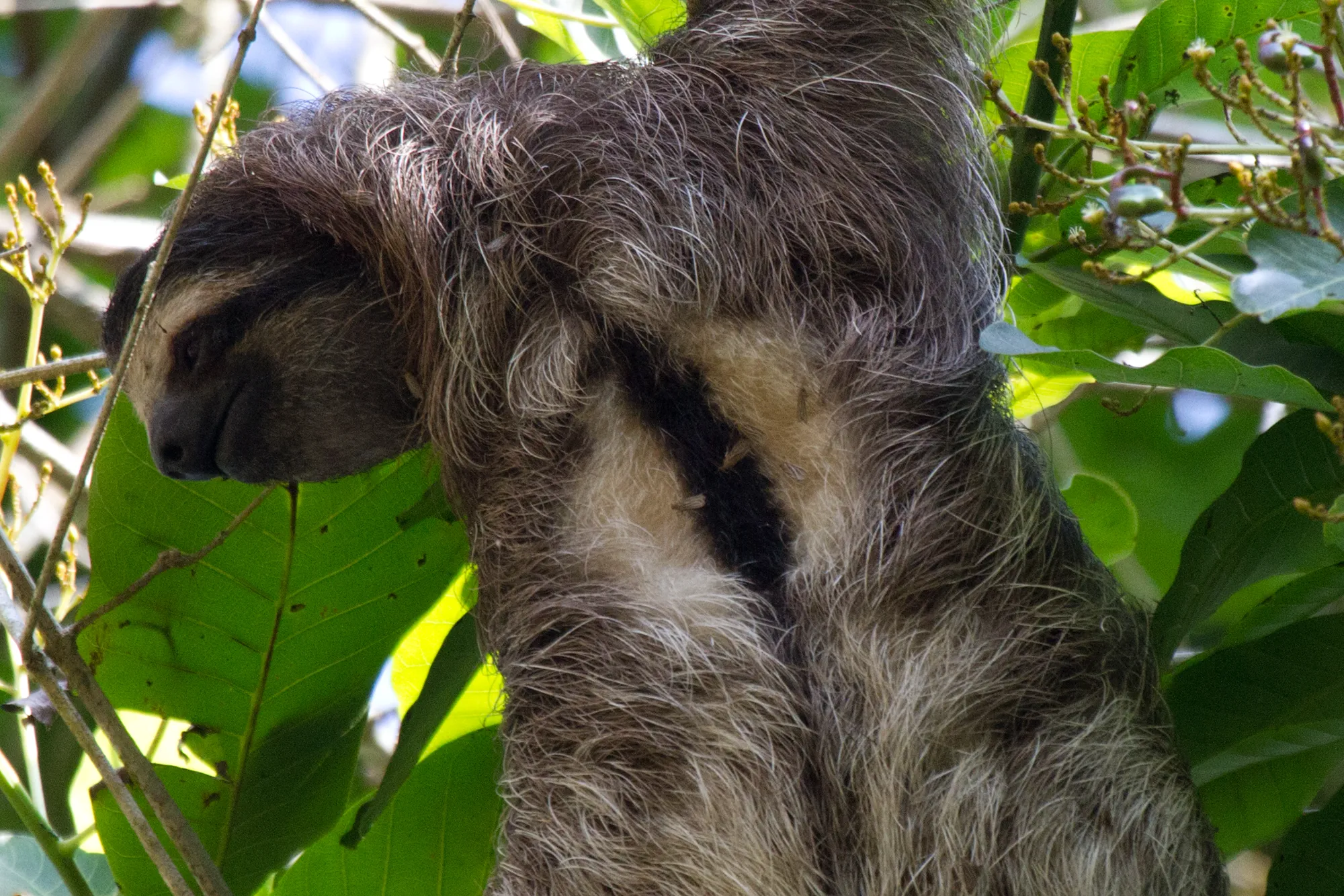
A coat with inhabitants. Sloth moths rest among the hairs. Inspect the marked area to see the fur at a larger scale.
Photo: Kristof Zyskowski & Yulia Bereshpolova, CC BY 2.0, via Wikimedia Commons01 / The inhabitants
A habitat at the scale of a hair.
Three-toed sloth hairs develop transverse cracks that hold rainwater. Algae grow in this wet habitat. The moth Cryptoses choloepi occupies the coat alongside them.
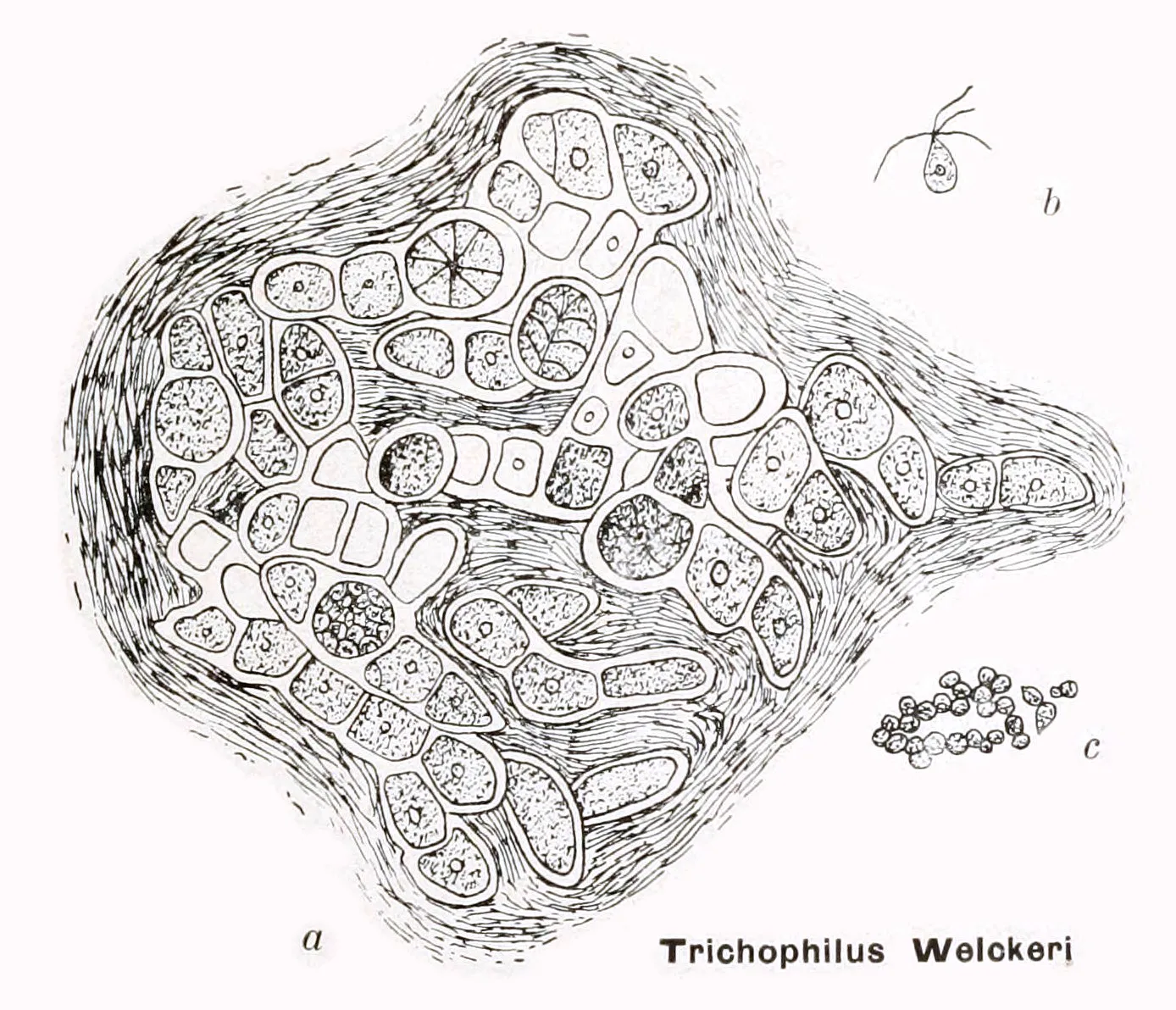
Trichophilus welckeri
The alga in a botanical atlas, a century before the proposed feeding loop. The complete plate preserves its original figures and labels.
Illustration: Henri Coupin, public domain, via Wikimedia CommonsAverage moth counts on three-toed and two-toed sloths in the Costa Rica sample. Three-toed counts ranged from 4 to 39.
Estimated microbial biomass in an average coat, about 2.6% of the sloth’s body mass.
Fur algae were richer in lipids than sampled food leaves: 27–45% lipid. This does not establish a feeding benefit.
02 / The relationships
From canopy to ground, and back.
Pauli and colleagues proposed a linked system in 2014. Follow the moth route, then inspect the proposed nutrient transfer and possible benefits.
Choose a connection to highlight its route and evidence. Every connection remains visible.
One animal, many inhabitants
in fresh dung.Observed movement
back to the fur.Observed movement
The proposed exchange
Same habitat · a closer viewHigher moth abundance accompanied higher nitrogen and algal biomass.
Decomposing moths may supply nutrients. Transport of waste is an alternative explanation.
Grows in the fur.
Coupin, 1911 · public domainThe moth completes its life cycle.
Larvae develop in the dung; adults return to the sloth. This route is distinct from the question of what the sloth gains.
An association needs a mechanism.
The measurements support a relationship. They do not establish that dead moths fertilise the fur.
The benefit to the sloth remains open.
The nutritional explanation remains contested. A camouflage benefit was proposed, not demonstrated by this study.
Sources: Pauli et al. 2014, including its proposed mechanisms; Waage & Montgomery 1976, moth life cycle; Monge-Nájera 2021, critique. Photograph: Kristof Zyskowski & Yulia Bereshpolova, CC BY 2.0.
03 / The disputed connection
Does the sloth eat its garden?
The 2014 study detected Trichophilus in some forestomach samples and proposed grooming as the route of ingestion. Those detections leave the mechanism and its nutritional importance open.
Monge-Nájera’s 2021 critique challenges the feeding explanation, citing reports that sloths do not lick their fur and cannot reach most of it. It also questions the evidence that moths fertilise the algae.
The weekly descent and the moth’s breeding route can be described without treating every proposed benefit as established. An inhabited coat is clear; a farm that feeds its host is still a hypothesis.
Trichophilus was detected in 2 of 12 three-toed sloths.
Pauli et al. 2014 · 17% of the animals sampled
Each mark is one sampled animal. Nondetection in a sample does not establish that an animal never eats algae.
Source: Pauli et al. 2014, methods §2(d) and results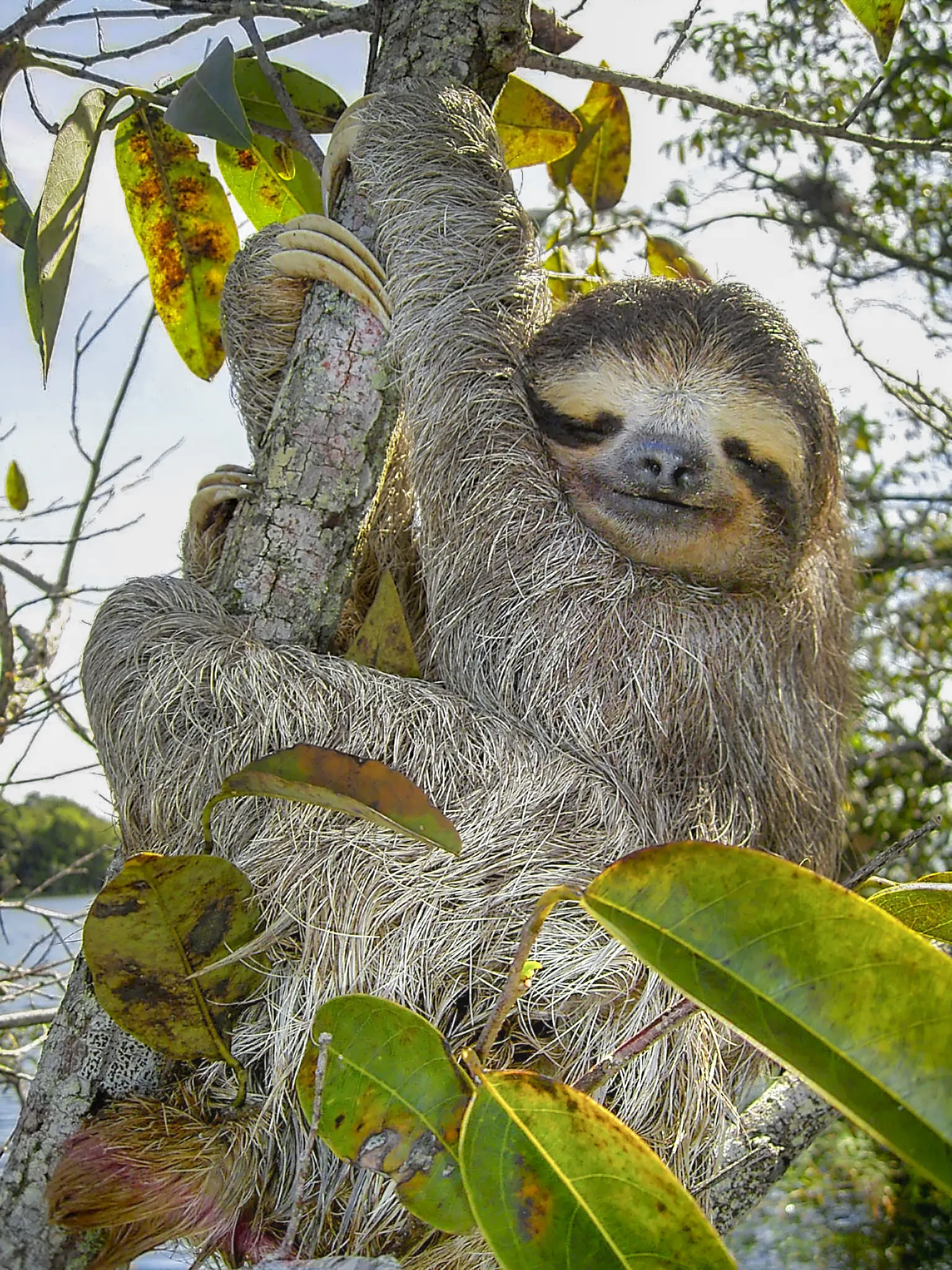
04 / From fur to laboratory
The microbial community is also being studied.
Fungi cultured from sloth fur in Panama produced extracts active against malaria parasites, Chagas disease parasites and a breast-cancer cell line in laboratory assays (Higginbotham et al. 2014).
A separate Costa Rican study isolated fur bacteria that produced substances inhibiting the growth of common mammalian pathogens (Rojas-Gätjens et al. 2022). These results describe laboratory activity; they do not establish a treatment in humans.
Sources & records
- Pauli et al. 2014, Proceedings of the Royal Society B — the mutualism hypothesis, moth counts, nitrogen, algae and forestomach samples
- Waage & Montgomery 1976, Science — Cryptoses choloepi: A Coprophagous Moth That Lives on a Sloth
- Suutari et al. 2010, BMC Evolutionary Biology — Trichophilus in sloth hair
- Monge-Nájera 2021, UNED Research Journal — a critique of the mutualistic model
- Higginbotham et al. 2014, PLoS ONE — bioactive fungi from sloth hair in Panama
- Rojas-Gätjens et al. 2022, Environmental Microbiology — antibiotic-producing fur bacteria in Costa Rica